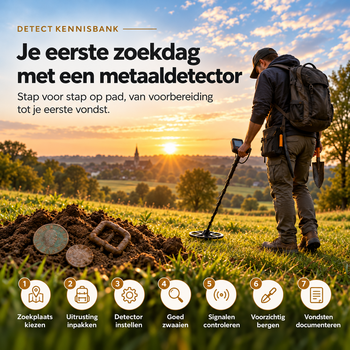
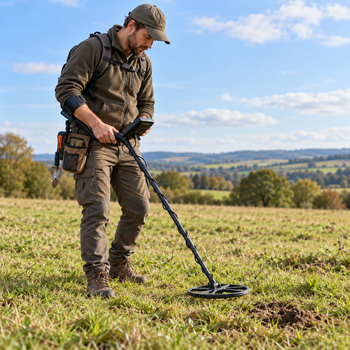
01 | YOUR FIRST DETECTING TRIP
Your first day out with a metal detector
Where can you search? How do you prepare, recognise a signal and dig carefully? A practical step-by-step guide to your very first trip.

New to metal detecting? Learn how to prepare for your first hunt, use a metal detector, identify and care for finds, and avoid common beginner mistakes. Practical tips from Detect Metaaldetectors.
DETECT KNOWLEDGE CENTRE | GETTING STARTED WITH METAL DETECTING
Want to start metal detecting but not sure where to begin? Perhaps you've just bought your first metal detector, or you're curious about the thrill of uncovering an old coin, buckle or another piece of history yourself.
Metal detecting is a hobby that gets you outdoors, takes you to new places and teaches you more about the history around you. Before heading out, though, it helps to understand the basics.
At Detect Metaaldetectors, we'll guide you step by step: from your first detecting trip and using your detector to identifying finds and avoiding common beginner mistakes.
You don't have to learn everything at once. Follow these simple steps and build your knowledge gradually.
STEP 1
Prepare for your first detecting tripLearn how to choose a permitted location and get off to a good start.
STEP 2
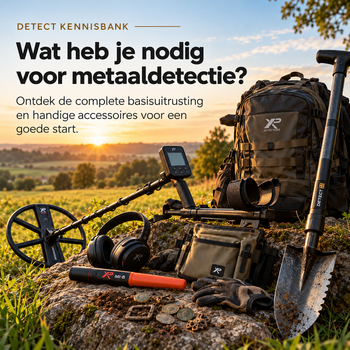
Put together your basic kitFind out what you really need and which accessories make life easier.
STEP 3
Get to know your detectorUnderstand search programmes, settings, sounds and Target ID.
STEP 4
Learn about your findsDiscover how to identify and care for your finds.
STEP 5
Avoid common beginner mistakesImprove your detecting technique and learn from familiar mistakes.
Whether you've never used a metal detector or have already been out a few times, these articles teach you the essential skills.
01 | YOUR FIRST DETECTING TRIP
Where can you search? How do you prepare, recognise a signal and dig carefully? A practical step-by-step guide to your very first trip.
02 | EQUIPMENT
From a detector and pinpointer to a spade, finds pouch and backpack. Discover what's essential, what's useful and what can wait.
03 | OPERATION AND SETTINGS
Learn to operate your detector step by step, including search programmes, sensitivity, Target ID, discrimination, audio signals and proper sweeping technique.
04 | FINDS AND HISTORY
Found an old coin, buckle, button or something unfamiliar? Learn how to identify finds, store them safely and understand when to report them.
05 | BEGINNER TIPS
Why does your detector give false signals? Should sensitivity always be at maximum? Explore ten common mistakes and how to avoid them.
You don't need to buy a whole collection of accessories straight away. A suitable metal detector is the foundation. Depending on where you search, a pinpointer, digging tool and finds pouch can be useful.
Choose a model that suits your budget, experience and detecting terrain.
Makes small metal targets easier to locate.
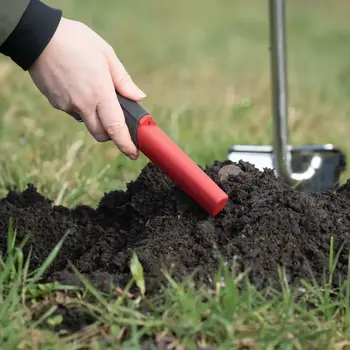
For careful digging where it is permitted.
Keep finds separate from harmless metal litter.
A good beginner detector doesn't have to be the most expensive. Ease of use, comfortable weight and clear signals matter just as much.
If you want a lightweight detector with modern multi-frequency technology right from the start, the XP ICON is worth a look. If you're looking for an affordable introduction to the hobby, there are also entry-level models from Nokta and Quest.
As the official XP importer for the Netherlands, Detect knows the XP ICON, ICON X and DEUS II inside out. We are also happy to compare other brands to help you find a detector that really suits you.
Before you start, check where metal detecting is allowed. In the Netherlands, national rules apply and municipalities may introduce additional restrictions.
Ask the landowner or other authorised person for permission and check whether the site is protected. Under the Dutch archaeological metal-detecting exemption, disturbance of the ground is generally limited to a depth of 30 centimetres, subject to the applicable conditions.
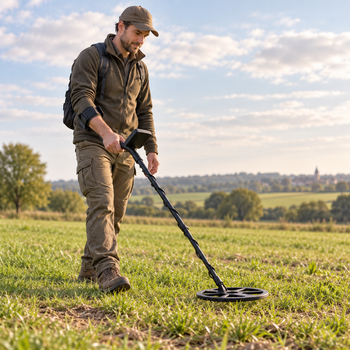
Start with a suitable detector and a location where searching is permitted. Learn the basic settings, practise slow, even sweeps and see how your detector responds to different metals.
A good beginner detector is easy to operate, produces clear signals and suits your budget and the terrain you want to explore. Suitable models are available at several price points.
Most people can learn the basics fairly quickly. Recognising signals, adjusting settings and developing good detecting technique take practice and patience.
It's not essential, but it's very useful. A pinpointer helps you locate small metal targets more accurately, often saving time when recovering an object.
Anything from coins, buttons, buckles and jewellery to old everyday objects and modern metal litter. Your finds depend heavily on the location and its history.
No. Check national and local rules, archaeological protection and permission from the landowner or other authorised person before searching.
MORE FROM THE DETECT KNOWLEDGE CENTRE
Still choosing a detector or wondering what to expect on different terrain? Browse the other sections of our knowledge centre.
At Detect Metaaldetectors, we love helping new detectorists get started, not only with a suitable detector but also with advice on settings, accessories, technique and responsible detecting.
At our showroom in Almelo, the Netherlands, you can see, hold and compare different metal detectors. This helps you find out which detector feels comfortable and meets your needs.
Whether you choose an easy-to-use beginner detector or a more advanced XP system, a great start begins with the right knowledge.
Detect Metaaldetectors – your first find begins with a good start.