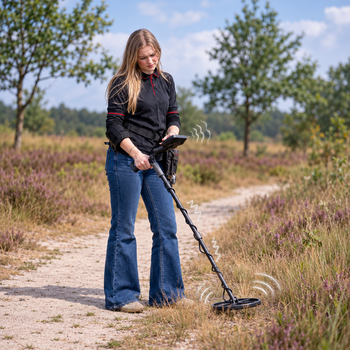
DETECT KNOWLEDGE CENTRE | METAL DETECTING TIPS & TECHNIQUES
Why does one detectorist find that small coin among iron, while another walks straight past it? And why does your metal detector work perfectly on one field but become much more unstable on another?
Successful detecting starts with understanding your metal detector. It's not just about knowing which button to press, but understanding why your detector responds in a particular way.
At Detect Metaaldetectors, we share practical knowledge about detecting depth, Target ID, ground mineralisation, frequencies, recovery speed and troubleshooting. This helps you detect more deliberately, assess settings more effectively and get more out of your own metal detector.
What would you like to know about your metal detector?
You don't need to understand every technical setting at once. Choose what you'd like to learn or which problem you want to solve.
I don't understand the numbers
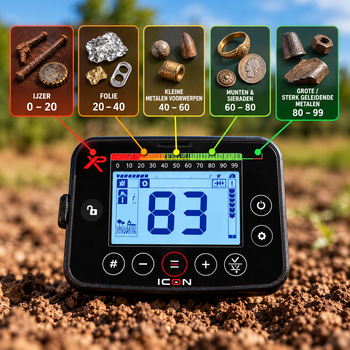
Learn how Target ID works and why the numbers sometimes change.
Understand Target ID →
My detector responds to the ground
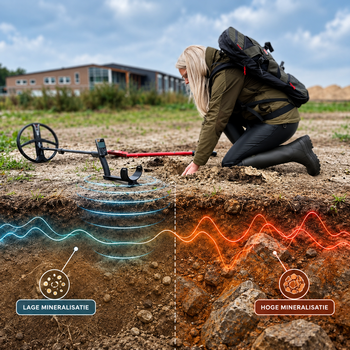
Understand mineralisation and discover when Ground Balance can help.
Explore Ground Balance →
Our Six Guides to Metal Detecting Tips and Technology
From the effects of ground mineralisation to recognising weak signals, these articles help you better understand the technology behind metal detecting.
01 | DETECTING DEPTH
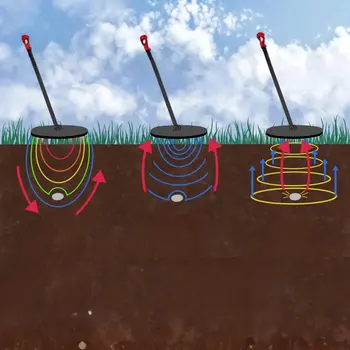
How Deep Can a Metal Detector Detect?
How deep can you find a coin? Does a larger search coil always offer greater detection range? And how do ground conditions, frequency and settings affect performance?
Ideal for: anyone who wants to better understand detecting depth and realistic detector performance.
Learn all about detecting depth →
02 | SIGNAL IDENTIFICATION
Target ID: What Do the Numbers Mean?
Why does a coin sometimes produce the same reading as aluminium? Learn how to interpret VDI, fluctuating numbers and audio signals together.
Ideal for: anyone who wants to understand what their detector hears and displays.
Learn to understand Target ID →
03 | GROUND PROCESSING
Ground Balance and Mineralisation Explained
What is Ground Balance? When should you use automatic ground measurement, and why does your detector respond to certain types of soil?
Ideal for: anyone who wants to understand unstable ground signals.
Discover how Ground Balance works →
04 | FREQUENCIES AND FMF
Single-Frequency or Multi-Frequency?
What's the difference between using one frequency and several frequencies simultaneously? Including explanations of beach detecting, ground conditions and XP FMF.
Ideal for: anyone interested in understanding frequency technology and multi-frequency detection.
Compare frequency technologies →
05 | DETECTOR SETTINGS
Adjusting Recovery Speed and Discrimination
Why can higher Reactivity help when detecting among iron? And why might excessive discrimination cause you to miss interesting signals?
Ideal for: anyone who wants to improve their results on metal-contaminated sites.
Improve your detector settings →
06 | TROUBLESHOOTING AND SERVICE
My Metal Detector Is Malfunctioning: What Should I Do?
Constant beeping, false signals or lost connections? Check the most common causes using our step-by-step guide.
Ideal for: anyone trying to identify a technical problem.
View our troubleshooting guide →
Five Habits That Help You Detect More Effectively
You don't have to be a technical expert to get more out of your metal detector. A few good habits can already make a big difference.
- Start with a suitable factory programme. First learn how your detector normally responds before changing lots of settings.
- Keep the search coil low and steady. Partially overlap your sweeps and avoid lifting the coil at the end of each swing.
- Don't listen only for perfect signals. Weak or short signals can also contain useful information. Learn to recognise the differences between tones.
- Change one setting at a time. This makes it easier to determine whether different sensitivity, Ground Balance or recovery speed actually helps.
- Compare what you hear with what you find. By comparing signals with recovered objects, you'll develop experience with your own detector.
Which Setting Does What?
Modern metal detectors include many technical terms. This short explanation helps you distinguish the most important settings.
| Setting |
What does it mean? |
| Sensitivity |
Influences the detector's sensitivity to received signals. |
| Target ID / VDI |
Provides a numerical indication of the properties of a metal target. |
| Ground Balance |
Helps process ground responses. |
| Noise Cancel |
Helps reduce certain types of electromagnetic interference. |
| Reactivity / Recovery Speed |
Influences the processing and separation of consecutive target signals. |
| Discrimination |
Suppresses certain target categories or changes how their signals are presented. |
| Multi-frequency |
Uses multiple frequency components simultaneously for detection and signal processing. |
The exact terminology and functionality vary between detectors. Not every model provides all the settings mentioned.
Get More from Your XP Metal Detector
XP is known for wireless detecting systems and extensive options for adapting detector performance to different conditions.
With the XP DEUS II, for example, you can use different FMF programmes, Reactivity, Ground Balance and audio settings. These allow you to adapt the detector to different terrains.
The XP ICON and ICON X combine FMF multi-frequency technology with straightforward controls. Particularly if you don't want to keep adjusting settings, the factory programmes provide a convenient starting point.
However, the same principle applies to XP: maximum sensitivity, minimum Reactivity or the largest search coil isn't automatically the best choice.
Learn how XP FMF and multi-frequency work →
As the official XP importer for the Netherlands, Detect is happy to help you understand settings and compare the differences between detectors and accessories.
Does Your Metal Detector Keep Giving False Signals?
Not every unstable metal detector is faulty. Sometimes the cause is sensitivity, ground conditions, electromagnetic interference or a wireless connection.
Our troubleshooting guide helps you check the most important possible causes yourself before having a component examined.
View our metal detector troubleshooting guide →
Frequently Asked Questions About Metal Detecting Technology
How can I get more out of my metal detector?
Start with a suitable search programme, improve your sweeping technique and get to know your detector's audio and Target ID readings. Adjust settings deliberately when conditions require it.
Which setting increases detecting depth?
There's no universal setting that always increases detecting depth. Ground conditions, target size, search coil, sensitivity and signal processing all influence the result. Read more about detecting depth.
Why does my detector's Target ID change?
Possible causes include a deep or small target, different metals close together, ground mineralisation and other conditions. Read our detailed Target ID explanation.
Is multi-frequency better than single-frequency?
Multi-frequency may offer advantages with different targets and challenging ground conditions. However, a good single-frequency detector can perform extremely well on suitable terrain. Read the comparison.
Why does my metal detector beep without an obvious target?
Possible causes include electromagnetic interference, ground responses, nearby metal, high sensitivity or a technical problem. Follow our troubleshooting guide.
FURTHER READING IN THE DETECT KNOWLEDGE CENTRE
Explore Our Other Advice Categories
Want to learn the basics first, choose a different metal detector or find out where you're allowed to detect? Explore our other knowledge centre categories.
Better Detecting Starts with Understanding Your Metal Detector
A metal detector sometimes offers more features than you'll need during your first few detecting trips. By learning about its settings step by step, you'll discover when they really make a difference.
At Detect Metaaldetectors in Almelo, we help beginners and experienced detectorists with practical questions about detecting techniques, settings, search coils and technical problems.
As the official XP importer for the Netherlands, we have extensive knowledge of the XP DEUS II, ICON, ICON X and compatible accessories. We're also happy to help you with other brands from our range.
Would you like to compare something in person or understand a setting better? You're welcome to visit our showroom in Almelo.
Detect Metaaldetectors – not just detecting more, but detecting smarter.